Unwanted
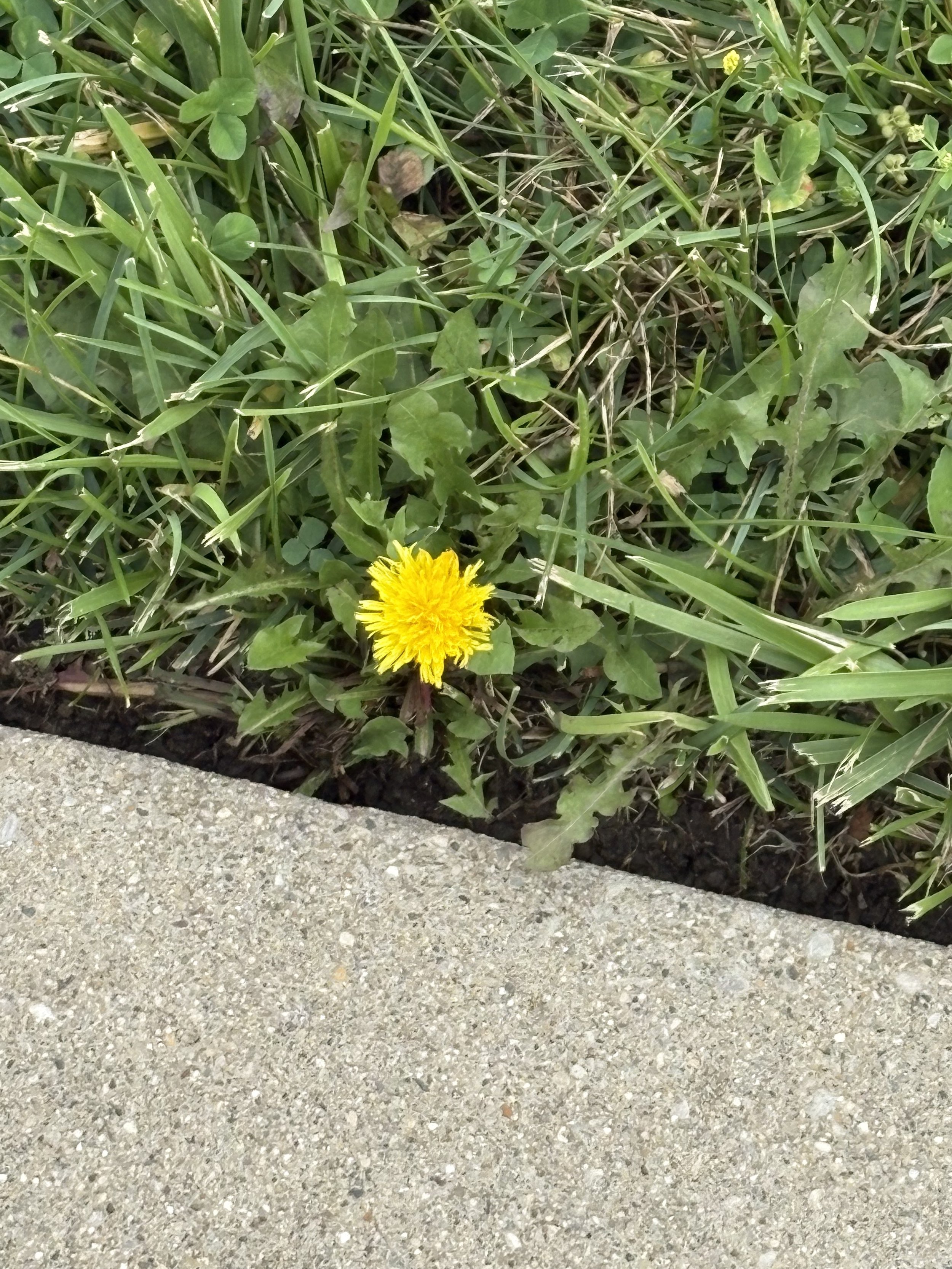
Image Description: A single yellow dandelion growing out of a patch of green grass next to a concrete sidewalk.
My process for taking this picture was inspired by the other photos of nature displayed in the study. I specifically chose to focus on a dandelion because modern perception of the dandelion is multifaceted. On one hand, dandelions are a weed, seen as ruining gardens for how much space they take up. Like the title implies, the dandelion is unwanted. However, despite its intrusion, dandelions are also seen as beautiful, celebrated for its own type of beauty. In the same light, LGBTQ+ lives are perceived as unwanted or undesirable because they ruin the repetition of unity of lawns or gardens. In the case of this photo, the dandelion ruins the continuity of grass throughout my neighborhood’s lawn. Similar to the apple in the Bible, the dandelion is its own forbidden fruit; the difference is that you’re expected to get rid of it. This resembles queer identities' current experiences in the US, where the government wants to get rid of us. But just like dandelions, we pop up despite others' wishes.
I center around the dandelion, and how it’s surrounded by grass. The grass represents heteronormativity, what we, as queer people, are supposed to follow. The dandelions represent us, who we are. There’s much more grass to the dandelion, demonstrating how despite how “loud” we are perceived to be, there’s only so much of us. Cisheterosexuals believe we are much more than we actually are because of how much we stand out against the norm. In contrast, the dandelion stands alone. While there were other dandelions in the neighborhood, it was few and far in between for the thousands of blades of grass that can be found. This isolation of the dandelion is a representation of queer identities, and how truly lonely being queer can be.
The dandelion relates to my identity as a queer individual because for the longest time, I struggled to find people like me in my area. I was the few openly out LGBTQ+ person in middle school. However, outside of my friend group, there were very few people like me. I had to reach out to online communities to find more people similar to me. Only then I could find my group. While there’s not many queer people in the world, they are all around us. You just need to search in the right place.