Sins of a Gamer
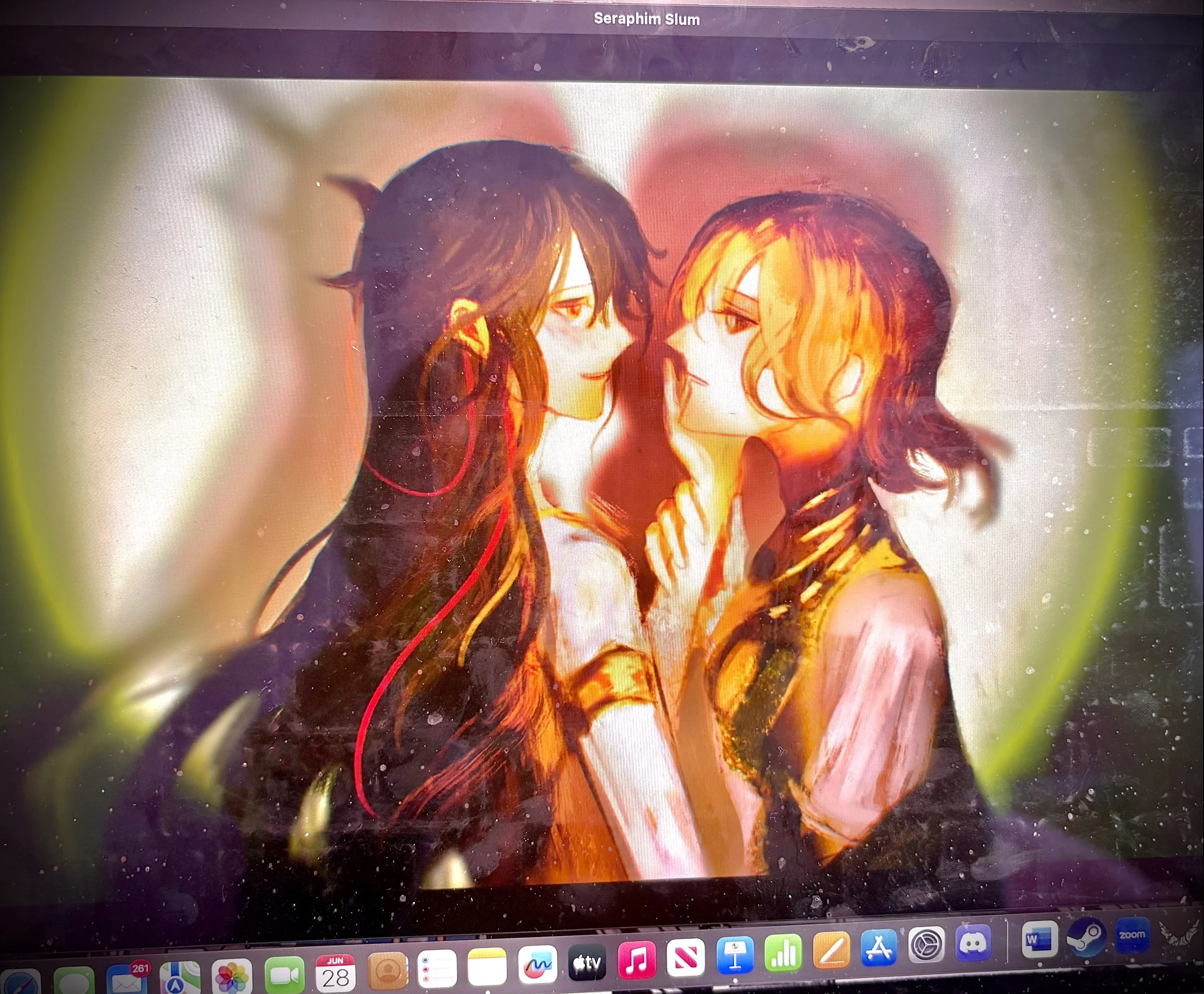
Image Description: A digital illustration displayed on a computer screen showing two animated characters facing each other closely, one with dark hair and one with orange hair. The image is warm-toned, and the computer’s dock icons are visible at the bottom of the screen.
My process for taking this picture is to center on the main focal point: the art. The art is a cutscene from the sapphic horror video-game, Seraphim Slum, where you play as sapphic Lucifer to get your three angel love interests, to fall. However, even with the central focus being on the game, I made sure to show the other apps beneath it—as well as the corners of the laptop itself. At the end of the day, this game out of my laptop. To consume a queer narrative, someone who appreciates queer media must be behind the screen. An active consumer, or listener, is always present.
The name “sins of a gamer” emerges from the themes of Seraphim Slum. With the game using ideas from Christianity, I brought the word sin, which homosexuality is associated with. As the game is a sapphic narrative, playing the homosexual game, Seraphim Slum, is my sin as a gamer.
Much like books, I search for representation in the games I consumed. I was personally recommended by a queer person for this game: a dating simulator. I bond with my friend over this game, strengthening my bond with them overall.
I have played other queer games, which includes but is not limited to: Monster Prom series, Date Everything, Love Curse: Find Your Soulmate, Potionomics, I Was a Teenage Exocolonist, Bandori, and more. These games are important to me because it features sapphic romance. Bandori in particular helped me be more comfortable with my identity as a lesbian, allowing me to meet other lesbians like me.
I hope that other people find the power of video games, and how it can connect people together, as well as solidify and explore your relationship to your own sexuality. Without video games, I wouldn’t feel as comfortable with my identity as I am today.